· iPhone · iPad
Greens: Mini-golf
Classic mini golf, seen from above. Pull back, let go, and see how many holes you can ace.
What it is
It looks like a real course from above, with green felt, cream rails and a little red flag. To take a shot, drag anywhere on the course and pull back like a putter. A line of dots shows where the ball will go at first, including off the rails and down slopes. Let go and it rolls.
You start on the classic courses. Meadow teaches one idea per hole, Lakeside mixes them up and ends at the windmill, and Village Green is a little harder. The theme courses come after that, and each one sticks to one idea, like every hole on ice, lava that carries the ball, or gravity that flips halfway through a hole.
Par earns a bronze medal, under par earns silver, and a hole in one earns gold. The Daily Three gives everyone the same three holes each day, and you get one try. A ghost ball replays your best run on each hole so you can race it. Each person in the family can have their own player, with their own medals and streak.
Version 1.0 has 72 holes on eight courses. Version 1.1 doubles that to 144 holes on sixteen courses and adds iPad.
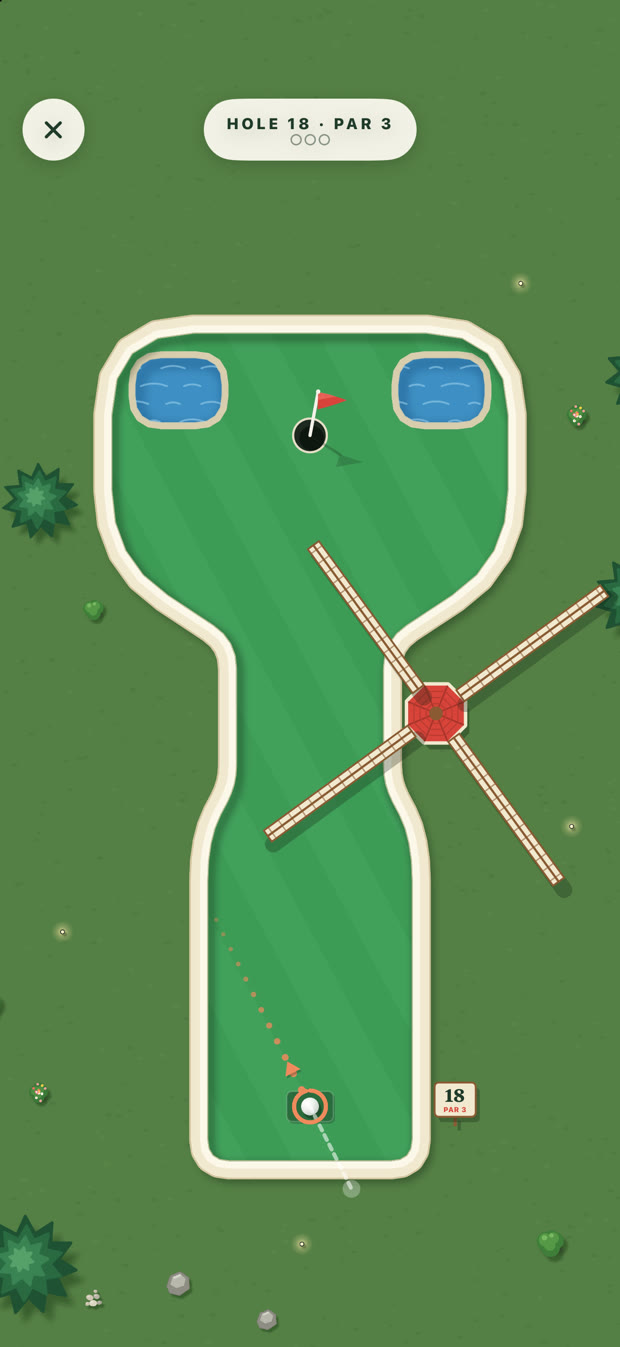
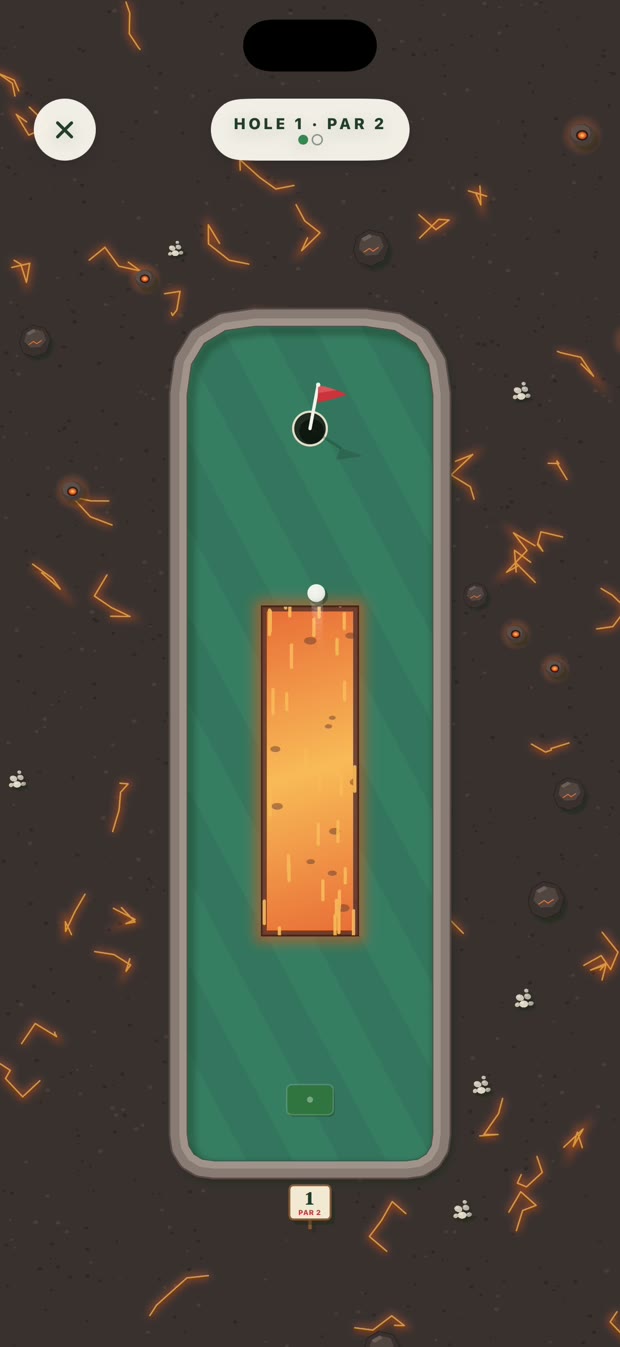
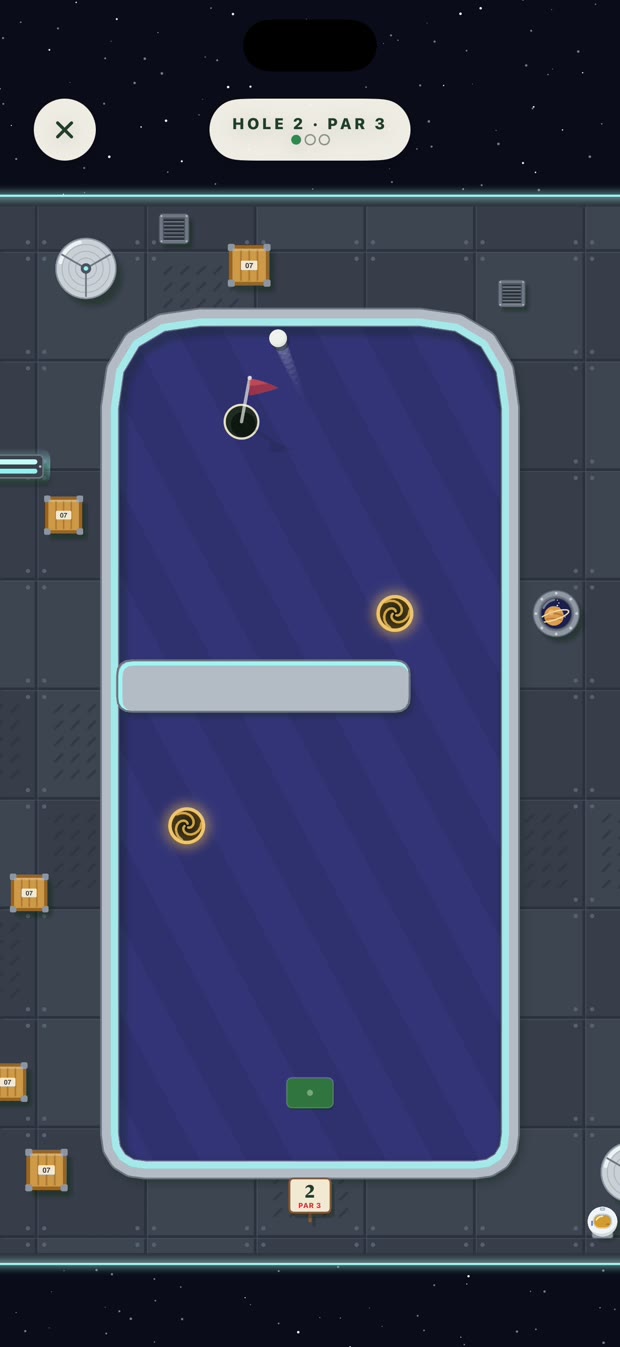
What's new in 1.1
Version 1.1 is in App Store review. It adds eight new courses and 72 new holes:
- Village Green: a third Classic Course, with a little more bite. Opens when you finish Lakeside.
- Inferno: lava flows carry the ball. Ride the river around a wall, get slung around a swirling pool, or fight the current.
- Dunes: sand bunkers slow you down; quicksand swallows a ball that bogs down, so hit it firmly.
- Crystal Caverns: pull and push crystals bend every putt. Curve around them like a comet.
- Castle: drawbridges, portcullis gates, moats and secret stairs.
- Pirate Cove: cannons fire you across the harbor, sea caves and currents carry you to the treasure.
- Toy Room: you're tiny: block walls, pencil bridges, book ramps and toy trains.
- Space Station: gravity that turns and flips, airlocks, wormholes and launch pads.
Also new:
- Players: everyone in the family gets their own medals, streak and ghosts, and the House Leaderboard shows who's best on your iPhone or iPad.
- Your Stats: tap the numbers at the top of the clubhouse for holes played, lifetime strokes, every hole in one and every medal, hole by hole.
- Play a Round: every course in one place, with the next one to play ready to go.
- The Front and Back Nine are now Meadow and Lakeside.
- Bigger holes in landscape.
- Pausing mid-hole keeps your ball where it lies, so you pick up from your last shot.
- Ten ball colors to earn, and race the ghosts of everyone who plays on your iPhone or iPad.
- 15 new achievements, and every player can see theirs in the app.
- Challenge friends through Game Center on the Daily Three or any course, and jump straight into a course from the Games app.
- Greens now plays on iPad, with a two-column clubhouse and the whole hole big on the screen.
- A new look: a windmill app icon and a quick windmill intro when Greens opens.
- Earn an achievement and it pops up right away, badge and all.
- Your Stats folds into neat sections, so everything's one tap away.
Why I built it
Mini golf is a game almost everyone already knows how to play, so there's nothing to explain.
A lot of golf games on the App Store are full of ads between holes, coins, energy meters and in-game stores. I wanted a simple one: a calm course and a good putt. You pay once, and that's it.
How I built it
Greens is a native SwiftUI app, built with Claude Code. From the first commit to App Store approval took about a week.
The physics engine is built from scratch, and the same putt always rolls the same way. That's how the ghost ball works: the game only saves your aim and power for each shot, not the whole path.
Every hole is designed in code. A solver plays each one thousands of times to set a fair par and check whether an ace is possible. Most holes can be aced. A few can't, as far as the solver can tell, and I'm not saying which ones.
← All posts